
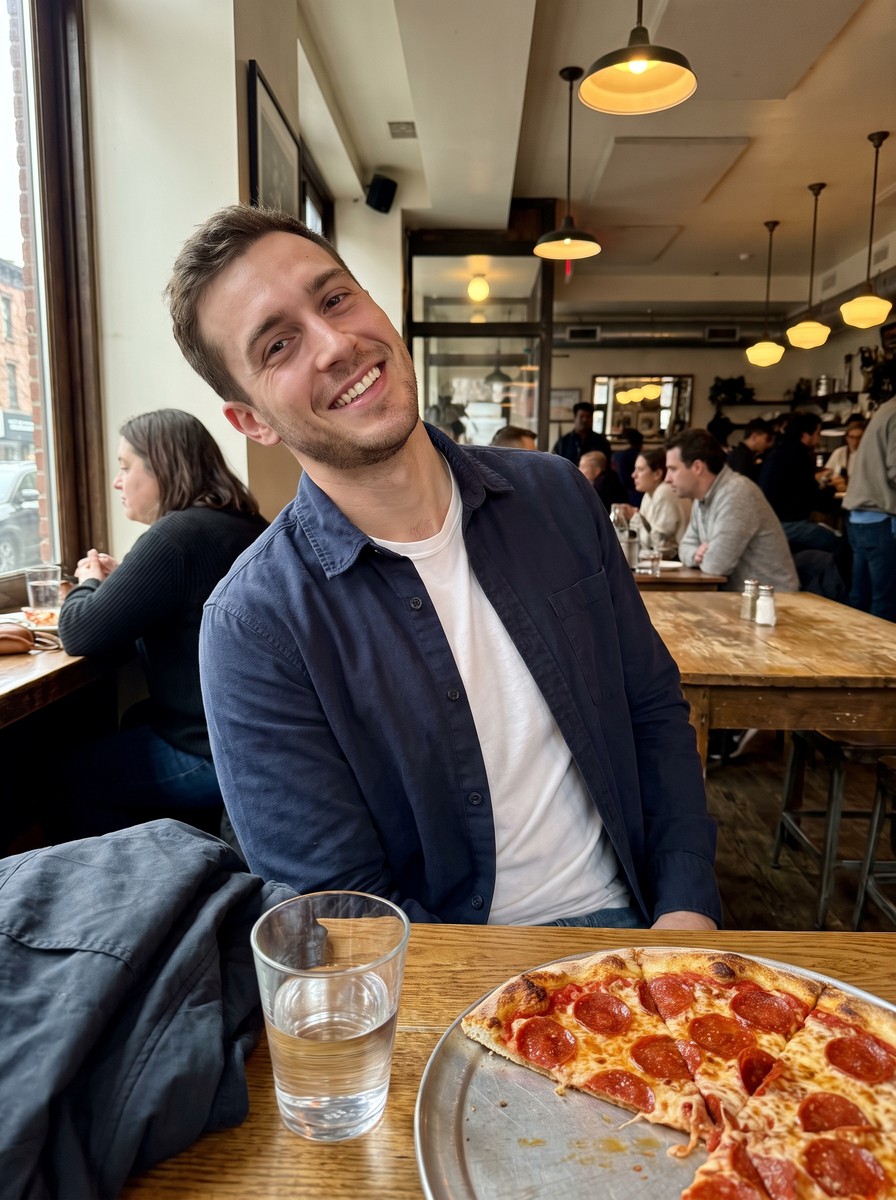
Six photos, six useful roles
SwipeIQ plans a six-photo lineup around a simple idea: each image should contribute something. This is our practical framework for giving the set variety and direction. Adapt it to the spaces available on your dating app.
| Photo | What it should add | What to avoid |
|---|---|---|
| Clear opener | A readable, recent solo portrait. | Hidden eyes, a tiny face or unclear identity. |
| Wider view | Your current appearance and personal style. | A misleading crop or an old body shape. |
| Real interest | Something you genuinely spend time doing. | A hobby chosen only because it seems impressive. |
| Everyday setting | A sense of what spending time with you could look like. | Another version of the same pose and background. |
| A different side | A different outfit, setting or energy that is still yours. | A sudden change in face, age or physique. |
| Conversation opening | A specific detail someone could ask about. | Filler included only to reach a photo count. |
The categories can overlap. A photo of you cooking may show your appearance, an interest and an easy conversation topic. You do not need a separate group shot, travel shot and pet shot just to complete a template.
Read the sequence as a whole
Lay the photos out side by side. If you cover any one of them, does useful information disappear? If not, that image might be redundant. Compare the two most similar shots and keep the one with the clearer face, more natural expression or better context.
A set can also be too inconsistent. Check that facial features, hair, build and approximate age agree across the lineup. This matters whether the pictures came from a phone, a photographer or an AI tool.
For example, a clear portrait, a wider park photo, cooking at home and a café shot introduce several sides of your life. Four similar suit portraits leave less room for that story. Choose variety with a purpose.
What the evidence says about order
A 2024 study by Kramer and colleagues tested sequences of six face images. The results suggested a limited role for order alone: a small difference appeared in one comparison, while the random sequence did not differ significantly from either sorted sequence. This puts the emphasis on choosing strong photographs and a varied set, alongside the sequence itself.
For SwipeIQ, the practical priority is a strong introduction and a complementary set. Published research sits alongside our proprietary dating-app data and private experiments in shaping the approach. Read how we turn those inputs into a photo plan.
Check whether the app changes your order
Hinge’s Top Photo feature can put the photo it predicts is most likely to receive a Like first. Hinge says the public order can differ from the order in your editing view. Check that setting before attributing a result to your manual arrangement.
Once the lineup is coherent, test one change at a time. Reordering all six photos while changing prompts and buying a boost makes the outcome difficult to interpret. Use a simple comparison log to make the next decision clearer.
Sources
- Kramer et al. (2024). Anchoring has little effect when forming first impressions of facial attractiveness.
- Hinge Help Center: What is Top Photo?
Sources checked October 18, 2026. Platform features and policies can change.
SwipeIQ research & guides. Our editorial approach.